TMJ Patients Served
Success Rate (Under 45)
Success Rate (Over 45)
Years of Experience
Months Interest Free Payment
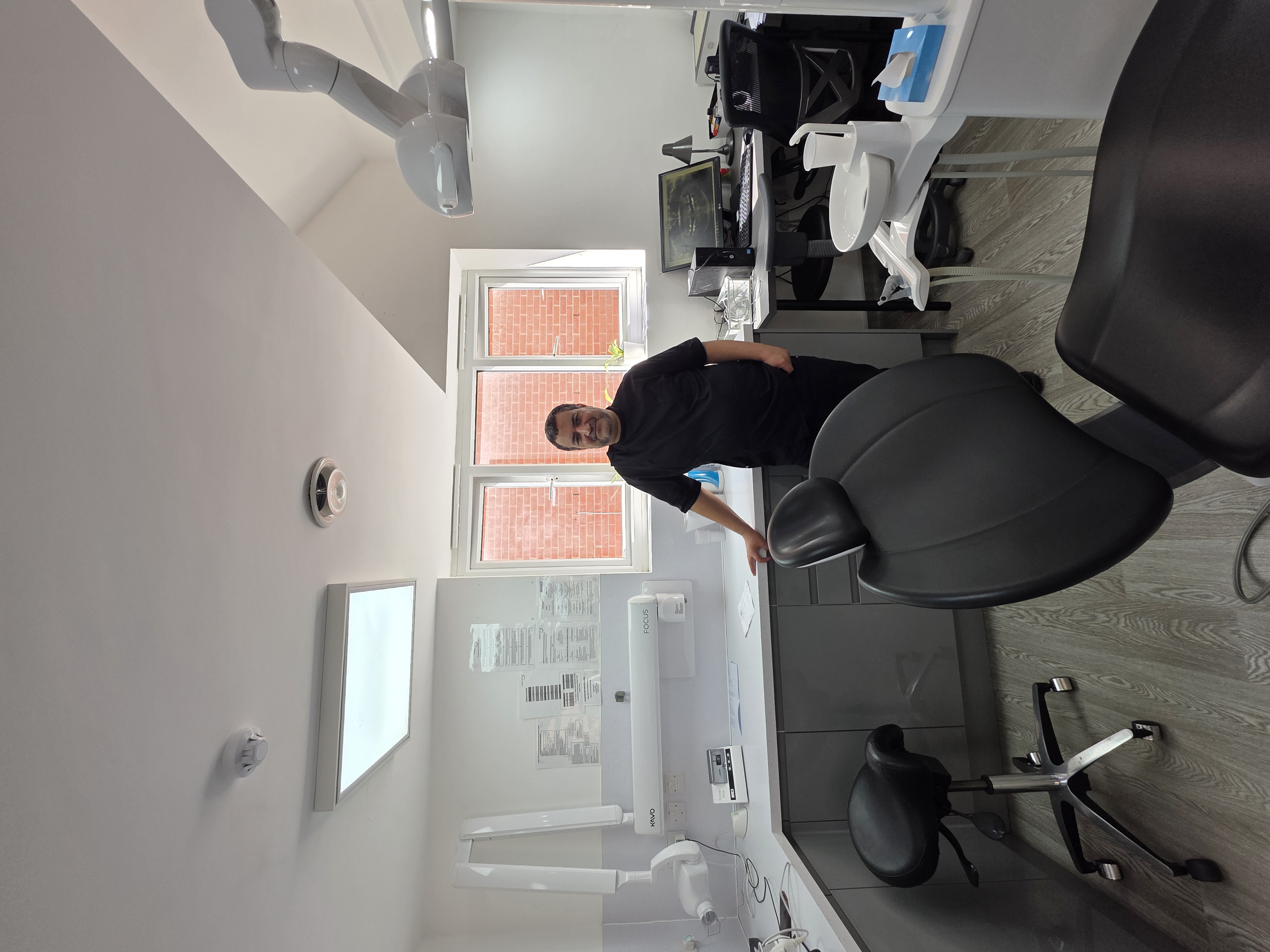
Personalised TMD Treatment with Dr. Khan
BChD, MFDCRCS, Diploma in Implant Dentistry (UCL), GDC: 70723
Dr Fareed Khan graduated from Leeds University in 1995 and has always had a special interest in Temporo-mandibular Joint Dysfunction. Whilst at Leeds University he undertook a summer elective studying TMJ patients and had a paper published entitled Generalized Joint Hypermobility as a Factor in Clicking of the TMJ (Int J. OMS, 1996). After graduating, he spent a couple of years in General Dental Practice, and then worked in hospital Oral and Maxillofacial Surgery Departments for 2 years. During this period, Dr Khan worked in the TMJ clinics in the Maxillofacial departments of the hospitals and gained experience in the treatment of TMD patients. Dr Khan then went to the USA for 2 years and studied Maxillofacial Radiology and Cranio-Facial Imaging and had a research placement in the National Institutes of Health, Bethesda, MD. He developed a special interest in the relationship of the Dental Occlusion to the position of the lower jaw and the effects this may have on the TMJs and associated structures.
Dr Khan then returned to the UK in 2004 and started work in General Dentistry at Perfect Smile Putney. However , Dr Khan continued his studies and spent 3 years at Warwick University studying Dental Implantology and Prosthodontics and then 5 years at Eastman Dental Hospital in London and gained a Diploma in Implant Dentistry from Eastman UCL in 2012. He then enrolled in several orthodontics courses and studied the relationship of the bite to the TMJ and head and neck structures. He undertook various courses in the USA , Asia, and Europe to build this knowledge base.
He has been using Clear Aligners since 2005 and has treated over 1000 patients with clear braces. He has used his knowledge of orthodontics and the relations of the bite to the TMJ and jaw muscles to develop a protocol to treat TMJ/TMD patients over the past decade and has successfully treated hundreds of TMJ patients over that period by realigning their bite. He continues to develop his knowledge and techniques further and hopes to be able to take this technology to other parts of the world in the future. Dr Khan is especially interested in the potential effects TMJ disorders can have not only on the jaw itself, but also on related structures close to the TMJ. For example, he has treated many patients with TMJ who also reported longstanding headaches, many of whom reported a reduction or resolution of their headaches with the TMJ treatment. He has also treated many patients who reported tinnitus along with their TMJ dysfunction, many of whom later reported a reduction or resolution of their tinnitus with their TMJ treatment.
Dr Khan believes that the bite can affect the jaw position and place strain on the TMJs and jaw muscles, and therefore, he has developed a protocol to realign the teeth and repair worn down teeth, and replace missing teeth to help support the jaw in its correct position. The aim is to allow the jaw to find its correct position in 3 planes of space so that the triad of the TMJs, the bite and the jaw muscles come into harmony. Most of the patients he has treated have reported a reduction in their TMJ and jaw muscle symptoms after this rehabilitation.
Dr Khan is likely the only dentist in the UK currently using this technique, although several dentists in the USA are using similar techniques, and Dr Khan believes this will revolutionize the care of TMJ patients as it becomes more mainstream.
He is happy to accept private referrals for patients with these symptoms and offers free online or in-person consultations.
Over the past 10 years, Dr Khan has gathered data on hundreds of TMJ patients that he has treated using this technique, and he is now analysing this data with the aim of writing a paper for publication in dental journals reporting on the success of this treatment. He is in talks with other medical professionals to potentially collaborate on this work.
TMJ Clinic in London
We offer free advice and guidance to help diagnose symptoms of TMJ and discuss what your next steps could be.
What is TMJ?
TMJ stands for Temporomandibular Joint (Jaw Joint), and describes symptoms associated with jaw joint disorders.
Studies have shown that up to two thirds of the population may have jaw misalignments and this may progress to symptoms such as TMJ pain, clicking, locking of the jaw, and jaw muscle symptoms such as headaches, jaw pain, stiff jaw, neck pain, grinding and clenching. There may also be ear compression leading to earaches and ear congestion, often with tinnitus.
For most patients the symptoms are mild and intermittent and they do not require any treatment. However, for some of these patients, the symptoms are persistent and noticeable and they often awake with a stiff or painful jaw, or get headaches or TMJ pain frequently. These patients should consider seeking treatment to address the cause of the symptoms and prevent long term damage.
Book a free online TMJ consultation with Dr. Khan and visit the clinic only when you're ready to proceed with the treatment.
What are the symptoms of TMJ?
Oral symptoms can include...
- Jaw joint pain
- Stiff jaw
- Clicking / grating sounds coming from the joint
- Limited mouth opening
- Jaw moving to one side on opening the mouth
- Grinding and clenching of teeth

Other symptoms can include...
- Pain around the ear
- Headaches
- Neck pain
- Tinnitus (ringing in the ear)
- TMJ pain
- Ear pain on flying

What are the Treatment for TMJ?
The traditional treatments include mouthguards (splints), jaw physiotherapy. These treatments are available through the NHS. However, Dr Khan is of the opinion, based on years of his own research and experience treating TMJ patients, that bite misalignment is often a major cause of TMJ dysfunction. If the bite is misaligned this can cause jaw displacements, and this will cause displacement of the condyles of the jaw in the TMJs, causing TMJ dysfunction, as well as cause tension in the muscles attached to the jaw, leading to muscular symptoms.There may also be ear compression, leading to symptoms such as earaches and tinnitus.
Using this philosophy, Dr Khan believes bite realignment to encourage the jaw to regain its correct position in its joints will be helpful to most patients with these symptoms. Of the hundreds of patients he has treated, most have reported improvement in their symptoms.
At our TMJ treatment center in Putney, Dr Khan, has been researching the relation of the bite to TMD symptoms for almost the last decade and has developed an application for the Invisalign Orthodontic Appliance that realigns the teeth such that the bite is improved and the jaw attains a more relaxed position.
TMJ treatment takes the strain off the jaw joints and jaw muscles and most patients report reduction in their TMD symptoms. Because the bite has been corrected such that the jaw attains a more comfortable position, the patient can expect long term reduction in their symptoms. Dr Khan has successfully treated hundreds of patients using this technique and has refined it over the years.
To book a free online or in-person consultation with Dr Khan to see if TMJ dental treatment may help you, please complete your details using the form at the bottom of this page.
Please enter as much information as possible about your symptoms, how long you’ve had them, what treatments you’ve tried so far.
Dr Khan will get back to you via email with advice about your condition and possible treatment for TMJ. YYou can also arrange a free TMJ appointment today.
Alternatively, please call our Putney practice on 020 8789 2323.
Book Your free Online Consultation