Imagine having the ability to straighten your teeth without dealing with the discomfort and unattractive appearance of conventional metal braces. With Invisalign, this dream has become a reality. But have you ever wondered how these nearly invisible aligners work their magic? In this article, we’ll dive into the science behind Invisalign and explore the innovative technology that makes it possible to achieve a beautiful, straight smile without anyone even noticing.
How Does Invisalign Work?
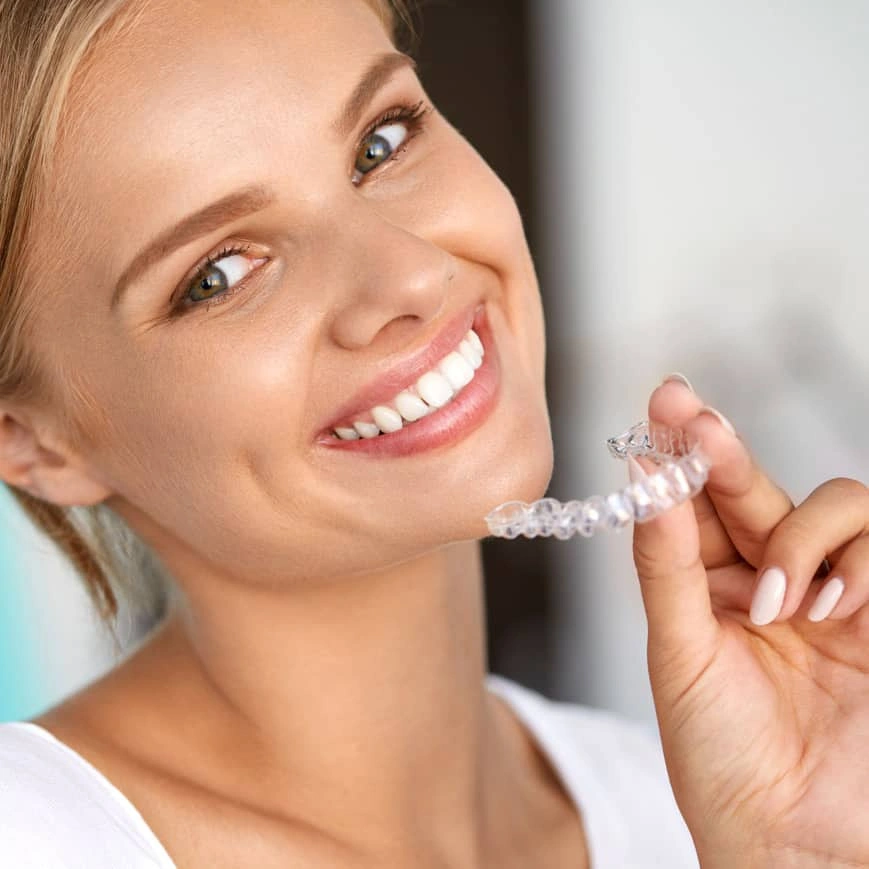
Invisalign is a teeth-straightening system that uses clear, plastic aligners to gently shift teeth into the correct position. The Invisalign process involves a series of custom-made aligners designed to fit snugly over your teeth. Each aligner is slightly different from the last, gradually allowing your teeth to shift into the desired position over time.
Each patient receives a unique set of aligners created using 3D imaging technology and made to be almost unnoticeable when worn. It has been demonstrated that Invisalign can successfully treat both adults and teenagers and is made to be a more effective and efficient alternative to conventional metal braces. The patient must wear the aligners for 20 to 22 hours daily, taking them out to eat, brush their teeth, and floss. Depending on the situation’s complexity, the treatment’s average length is 6 to 18 months.
How Invisalign Moves Teeth?
To understand how Invisalign moves teeth, it’s important first to understand the basic principles of tooth movement. When an external force is applied to a tooth, it causes the surrounding bone to resorb on one side and form new bone on the other. Over time, this process allows the tooth to move in the direction of the force.
However, if too much force is applied to a tooth, it can actually cause damage to the surrounding tissues and structures. That’s why it’s important for orthodontic treatment to apply gentle, controlled forces that are strong enough to move the teeth but not so strong as to cause harm.
How Invisalign Aligners Move Teeth?
Invisalign aligners apply gentle, controlled forces to the teeth in a precise and targeted manner. Each aligner in the series is designed to fit snugly over the teeth and apply pressure to specific areas to encourage them to move in the desired direction.
The aligners are made from a special type of plastic that is flexible and durable yet also lightweight and comfortable. This plastic is called thermoplastic polyurethane, or TPU for short. TPU is a biocompatible material, meaning it is safe to use in the human body and does not cause any adverse reactions.
When you wear an Invisalign aligner, it fits tightly over your teeth and applies a constant, gentle force to them. The aligner is designed to apply the most force to the teeth that need to be moved the most while also supporting the surrounding teeth and tissues. This orthodontic treatment can gradually close the Invisalign gap teeth and create a beautifully aligned smile.
As you progress through your series of aligners, each one will differ slightly from the last. Each aligner builds on the progress made by the previous one, so by the end of the treatment, your teeth will have gradually shifted into the desired position.
The Science Behind Invisalign Aligner Design
Designing the perfect Invisalign aligner is both an art and a science. It requires careful planning, precise measurements, and a deep understanding of the biomechanics of tooth movement.
When designing an Invisalign aligner, the orthodontist starts by taking a digital scan of the patient’s teeth. This scan is then used to create a 3D model of the patient’s mouth, which can be viewed from all angles and manipulated in various ways.
Using this 3D model, the orthodontist can design a series of custom-made aligners to perfectly fit the patient’s teeth. Each aligner is designed to apply the right amount of force to the right areas of the teeth in order to achieve the desired movement.
To ensure that the aligners are as effective as possible, the orthodontist must also consider a number of other factors, such as the patient’s bite, the shape of their teeth, and the surrounding tissues and structures.
FAQs
How to Remove Invisalign?
You can gently apply pressure to the edges of the aligners and lift them off your teeth.
How to Clean Invisalign?
Gently brush the aligners using a soft toothbrush and non-abrasive toothpaste, or soak them in a denture cleaner for a few minutes. While this is the most straightforward way, there are other methods to clean Invisalign for you to explore.
Is Invisalign Painful?
While some patients may experience minor discomfort during the adjustment period, overall, Invisalign treatment is known for its minimal pain compared to traditional braces.
What are the Potential Side Effects of Invisalign Treatment?
Invisalign side effects are typically mild and temporary, including slight pressure or tenderness in the teeth and gums. However, it is important to maintain good oral hygiene to minimise the risk of potential complications such as Invisalign infection.
Conclusion
Invisalign aligners work by gradually moving your teeth into the ideal position using a set of transparent, custom-made plastic trays. The aligners apply gentle, controlled forces to the teeth, which are designed to move them in small increments. Each set of aligners is worn for two weeks and then replaced with a new set that is slightly different, gradually shifting the teeth over time.
This process continues until the desired position is achieved. Invisalign aligners offer many benefits over traditional braces, including a more discreet appearance, greater comfort and convenience, and improved oral hygiene. With proper care and maintenance, Invisalign aligners can provide a successful orthodontic treatment for a wide range of dental issues. It is important to consult with your orthodontist to determine if Invisalign is the right treatment option for you.
To make Invisalign more affordable, we offer flexible Invisalign finance options, allowing patients to pay for their treatment cost of Invisalign through monthly instalments, making it easier to achieve a straighter smile without breaking the bank with Perfect Smile Dental.