Teeth veneers are caps used to cover the crooked, stained, discoloured, misaligned, and broken teeth. The purpose is to obtain good-looking and healthy teeth.
Initially, the attaching veneers to the teeth was limited to treating the dental issues. Gradually, they became a part of the dental cosmetic industry.
With an elevated interest in oral health, the transition to dental cosmetic treatments was a short one. For instance, compared to the last decade, the number of enquiries about dental implants and veneers has increased by 33%.
The need to get Instagram-perfect smiles has led to a boom in the dental cosmetics industry in the country. At present, the dental cosmetics market is valued at £2.2 billion.
Let’s talk about veneers, how much do veneers cost, their types, factors influencing veneers cost, and their substitutes.
What are Veneers?
Veneers are small tooth-coloured shells made out of thin material. They are attached on top of the tooth and are meant to change the shape, colour, and size of the teeth. A dentist may recommend someone to get a veneer in case of;
- Tooth discolouration
- Misaligned teeth
- Tooth gaps
- Chipped teeth
- Enamel erosion
- Dental beauty enhancements
Veneers are predominantly made out of two types of materials. These include;
- Porcelain
- Composite
As the demand for aesthetic dental treatments rises in the UK, more people want to get veneers. According to a survey, 43% of the respondents in the UK want to improve their teeth health and looks. One of the main reasons to get whiter and good looking teeth is to improve self-confidence and self-esteem.
As a result, a large number of residents are enquiring about how much does veneers cost and what’s the procedure to get veneers. The procedure to get both types of veneers is different, and with them, the veneers cost also differs. The Porcelain ones are more expensive than the composite veneers.
Types of Veneers
You will find two types of veneers in the industry, porcelain and composite. However, some dentists offer four different types of veneers.
Porcelain Veneers
Porcelain veneers are thin, strong, and have a natural shape and look, making them a good option for getting great-looking teeth with a perfect smile. They are made out of durable and natural-looking materials, which also makes them biocompatible.
Biocompatible means that veneers won’t hurt the gums and mouth tissues. Due to their effectiveness and ability to replicate the tooth shape and colour perfectly well, the porcelain veneers price is also higher than other types.
This is also due to the fact that they make your teeth stronger, whiter, and tougher than before. You will achieve a higher resilience towards the substances which could damage the natural teeth and their enamel.
Because of their sturdy material, the porcelain veneers will not chip or fracture, plus they won’t stain and lose their colour.
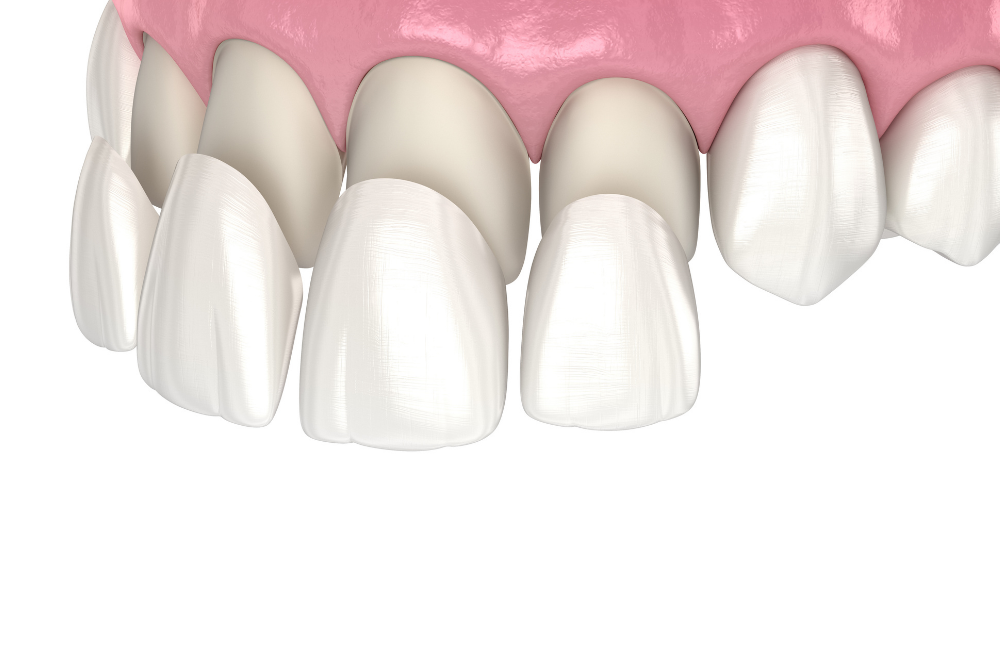
How are Porcelain Veneers attached?
A typical porcelain veneer procedure takes six weeks to complete. The initial visits are meant to take the measurements, and the dentists will remove some of the tooth enamel to fit in the veneers.
A major part of the entire veneer attachment exercise is to ensure your comfort.
As it’s a cosmetic procedure, several dental clinics offer more than an end-to-end procedure.
There are dental spas, audio/video distraction techniques, sedation, etc. Another element is customisation of the veneers. You can choose the veneer colour according to your requirements via the shade chart available at the practice.
Going one stage further, there are dental veneer imaging techniques, which give a preview of the teeth with veneers. However, the more services you add, the higher the veneer teeth cost.
As they have a strong structure and last longer, it’s easier to maintain the porcelain veneers. Regular maintenance activities like brushing and flossing will certainly help increase their life. Even though they don’t stain, porcelain veneers like natural teeth can smell, so brushing is essential.
Composite Veneers
Resin-based composite veneers are made from a mix of inorganic and organic substances. The biggest selling point of these veneers is that they are minimally invasive. As a result, the composite veneers cost is also less than the porcelain ones.
Composite veneers are further divided into two categories;
- Direct composite veneers
- Indirect composite veneers
There isn’t much difference between direct and indirect composite veneers. The material used in both is identical, but the application process and sustainability is different.
It takes more time to build indirect veneers. They can withstand relatively more abrasions and show higher resistance to fractures or breakages.
On the other hand, the direct composite veneers are easier to attach, and the dentist will only remove a small amount of enamel from the tooth for completing the process.
Taking care of composite veneers requires more work as they get stained after some time. Veneers, generally, do not fall off. But if there are issues with the attachment or if the dentist has not used the right procedure, they can fall off without notice.
Lumineer
Lumineers are not veneers by definition. Rather, they are a brand of veneers (also called no-prep veneers). They are not made from porcelain but have ultra-thin laminate material, which gives them more transparency, smoothness and a slippery finish.
Attaching the lumineers is easier because they are thinner than veneers, but this also means they can fall off easily and do not have the same strength, quality, and adaptability as the veneers.
As they are more fragile and prone to damage, you need to be extra careful with lumineers. The branded veneers cost is at par with the porcelain veneers, but their utility is not equal to the latter.
Removable Veneers
Another name for the removable veneers is snap-on veneers, and they are divided into two subtypes;
- Instant veneers
- Custom Clip-On veneers
The instant veneers are cheap substitutes for white teeth. They are soft, can be installed at home and are available as an over the counter product.
We do not suggest buying instant veneers even though they are the cheapest of all. Ultimately, these veneers will do more damage to your teeth than good.
The Custom Clip-On veneers are made in laboratories by taking into account the person’s teeth size and dimensions. Here, you can ask a dentist to take the impressions or use an at-home measurement kit.
Here too, you are not getting a guarantee whether the veneers will stay in place. They may be effective for the short term but are not suitable for long term use.
Out of the four types of veneers, porcelain and composite veneers are popular because of their utility, value for money, endurance, and ability to give you white teeth for a long time.
How Much Do Veneers Cost?
Porcelain Veneer Price
The porcelain veneers cost ranges between £660 to £1800 per tooth. The high price comes from the ability to customise the veneer as per your choice, the high-quality material and the fact that these veneers can last for up to 20 years.
Composite Veneers Cost
Composite veneers cost ranges between £300 to £1100 per tooth. The composite veneers are less expensive than the porcelain veneers but also have a shorter life, can get stained, and are vulnerable to fractures. Any other cost variations depend on your dentist and the procedure to attach the veneers to your teeth.
Lumineers
Lumineers are a substitute for porcelain and composite veneers. A lumineer implant for one tooth will cost you between £600 to £1500. Their cost is almost equal to the composite veneers, but their utility is much less. In other words, lumineers’ value for money is not satisfactory.
Removable Veneers
The typical instant veneer teeth price is between £14 to £36 per set. Removable veneers may be the cheapest, but they provide temporary utility.
For the clip-on veneers, which are specifically prepared in laboratories, you are looking to spend between £360 to £450 for all teeth (upper and lower arches).
Why are Veneers Used?
Veneers have multiple use cases, and all of them can be summarised under two categories;
- Medical issues
- Aesthetic improvements
Among the medical issues, as we have discussed above, veneers can be used to rectify crooked and misaligned teeth. They can be used for treating conditions like enamel erosion, fractured or chipped teeth, and also in case of malnourished teeth.
The aesthetic purpose of getting veneers stems from the need to look good and have white teeth. A perfect smile and good teeth are a confidence booster, and they make you look more attractive, which is why people all are showing a heightened interest in getting veneers.
What Are The Other Options Than Choosing Veneers?
Veneers aren’t the only way to get whiter and stronger teeth. Other options include;
Teeth whitening treatments
You can use at-home teeth whitening kits available as over the counter products. But taking a professional’s help will be more effective and safer.
Dentists use medically approved materials to whiten your teeth and remove the excess dirt plus stains to restore your teeth’s natural colour. Whitening the teeth beyond their natural shade is called bleaching, which is also practised in the dental cosmetic industry.
Bonding
Bonding is similar to getting veneers. The process requires using adhesive composite resin with matching tooth colours. The process is simple, reversible, and will cost less than getting porcelain veneers.
Conclusion
Dental veneers are highly effective in hiding your tooth imperfections, crookedness, fractures, and discolouration. Choosing the right type of veneers is essential as some of these processes are irreversible.
Make sure to consider the veneers cost, utility, life, and durability. As it’s a long-term solution to your dental issues, ensure to consult a dentist before getting veneers and explain your requirements to get the best.
FAQs
1. What kind of preparations are needed to get veneers?
Before getting veneers, you will need to discuss the issue with your dentist. On your part, you must share every piece of information with your dentist and make sure to consider the veneer price and post-treatment maintenance.
2. Are there any side effects of getting veneers?
Getting veneers means removing the natural tooth enamel and replacing it with porcelain or resin composite. Where porcelain and composite veneers do not have any side effects, the same cannot be said about clip-on veneers. They can cause dental issues like infections, especially in people with sensitive gums.
3. Can veneers fall off from the teeth?
Yes, veneers can fall off either on their own or due to excessive wear and tear. In any case, you can always get a new veneer to replace the fallen ones. However, if they come off shortly after the treatment, then chances are that your dentist did not do a very good job.
4. How long do veneers last?
It depends on the type of veneer you are getting. Where porcelain veneers can last for up to 20 years, composite veneers can last for up to 5 years; the clip-on veneers can only be used for one day. The veneers cost will be more for the ones that last longer as compared to the veneers with a shorter life span.
5. What are some general caretaking tips after getting veneers?
After getting veneers, take care of a few things, including;
- Do not bite on hard objects like ice.
- Refrain from biting your nails.
- Avoid teeth grinding.
- Avoid eating chewy foods.
- Do not open items with your teeth.