


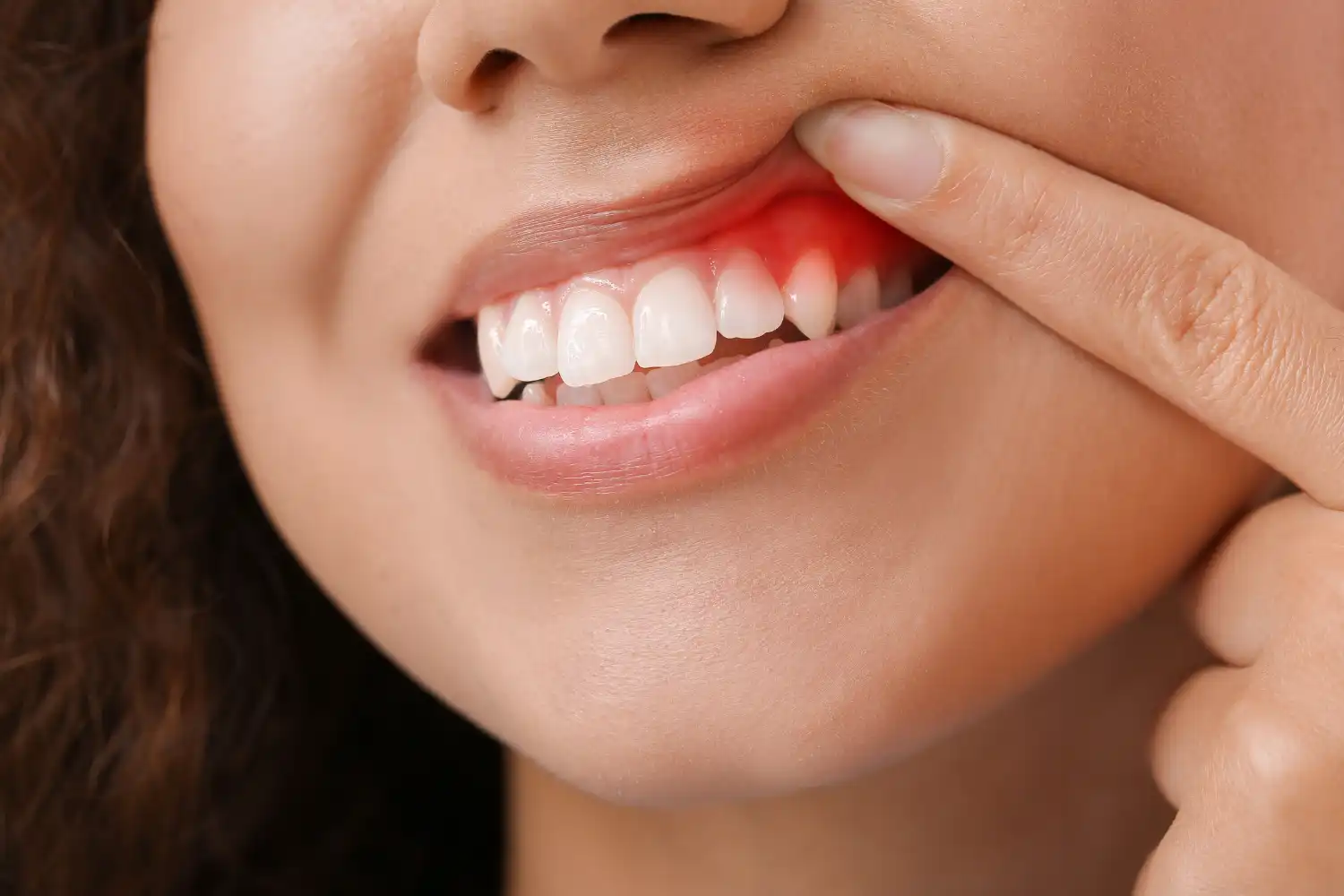
It can be difficult to know whether the way your teeth meet is actually unusual. Most people naturally have some overlap between their upper and lower front teeth. So, seeing your upper teeth sitting slightly over your lower teeth does not automatically mean you have a problem. The important question is how much the teeth overlap and how the rest of your bite works. This is where the difference between an ordinary overbite and a more significant bite issue becomes clearer.
What Does a Normal Bite Look Like?
A normal bite is not about every person’s teeth looking identical. Teeth naturally vary in shape, size and position. Generally, the upper front teeth sit slightly in front of and overlap the lower front teeth when the mouth is closed. The upper and lower back teeth should also meet in a way that allows you to bite and chew comfortably.
The British Orthodontic Society’s guidance describes an average overbite as covering around one-third to one-half of the lower incisors, although individual assessment is more important than trying to diagnose your own bite from a measurement alone.
Overbite vs Normal Bite
The difference between an overbite vs normal bite is largely a question of degree. A certain amount of vertical overlap is expected. An overbite becomes a concern when the upper teeth cover too much of the lower teeth or when the way the teeth meet causes functional problems.
A deeper overlap may sometimes be described as a deep bite. More significant cases can involve the upper teeth contacting the gum tissue behind the lower teeth or the lower teeth contacting the palate. The appearance of the front teeth alone does not tell the whole story. Dentists and orthodontists also assess how the back teeth meet and how the jaws relate to one another.
Overbite and Deep Bite: Are They the Same?
Not quite. An overbite describes the vertical overlap between the upper and lower front teeth. Some overlap is normal. A deep bite generally refers to an excessive vertical overlap. In other words, a deep bite is a more pronounced form of overbite. The distinction can be useful, but the terminology should not encourage self-diagnosis. Two people can have a similar-looking overlap while having very different overall bite relationships.
Overbite vs Underbite
An overbite and underbite describe opposite relationships between the upper and lower front teeth. With an overbite, the upper front teeth sit over the lower front teeth. With an underbite, the lower teeth sit in front of the upper teeth when the jaws are closed.
The difference may involve the position of the teeth, the relationship between the jaws or both. More significant differences between the upper and lower jaws can require a more complex assessment than simply looking at the front teeth.
How Does an Overbite Compare With Other Bite Issues?
An overbite is only one way in which the teeth can fail to meet ideally. Other bite relationships include:
- Underbite — lower teeth sit ahead of the upper teeth
- Open bite — some upper and lower teeth do not meet when the mouth is closed
- Crossbite — one or more upper teeth bite inside the lower teeth
These problems can sometimes occur alongside other alignment issues, which is why a bite cannot always be placed neatly into one category based on a mirror check. If you have already been told that your bite needs attention, our guide to how to fix bite problems explains how different bite issues may be corrected.
Can You Tell Whether Your Overbite is Normal at Home?
You can observe how your teeth meet, but it is difficult to determine the significance of an overbite without a professional examination. The position of your front teeth is only one part of the assessment. An orthodontist also considers:
- How the back teeth meet
- The position of individual teeth
- The relationship between the upper and lower jaws
- Whether the bite is affecting function
- The overall health of the teeth and gums
Orthodontic assessment may include examining the teeth and jaws and, where appropriate, taking photographs, X-rays or scans. In suitable cases, orthodontic braces can be used to move teeth and improve the way the upper and lower teeth meet.
When is an Overbite Worth Having Assessed?
Not every overbite needs treatment. However, an assessment may be worthwhile when the bite is making it difficult to chew, keep your teeth clean or when certain teeth are experiencing unusual pressure or wear. Prominent teeth may also be more vulnerable to damage.
The purpose of an assessment is not simply to decide whether teeth look straight. It is to understand how the teeth and jaws are functioning together. For suitable patients, Invisalign may offer another orthodontic approach for gradually moving teeth.
The Difference is Not Always Obvious
A small amount of overlap between your upper and lower front teeth is perfectly normal. An overbite is not defined simply by whether one set of teeth overlaps the other, but by the nature and extent of that relationship. The best way to understand your own bite is through a proper dental or orthodontic assessment rather than comparing it with photographs online.
