


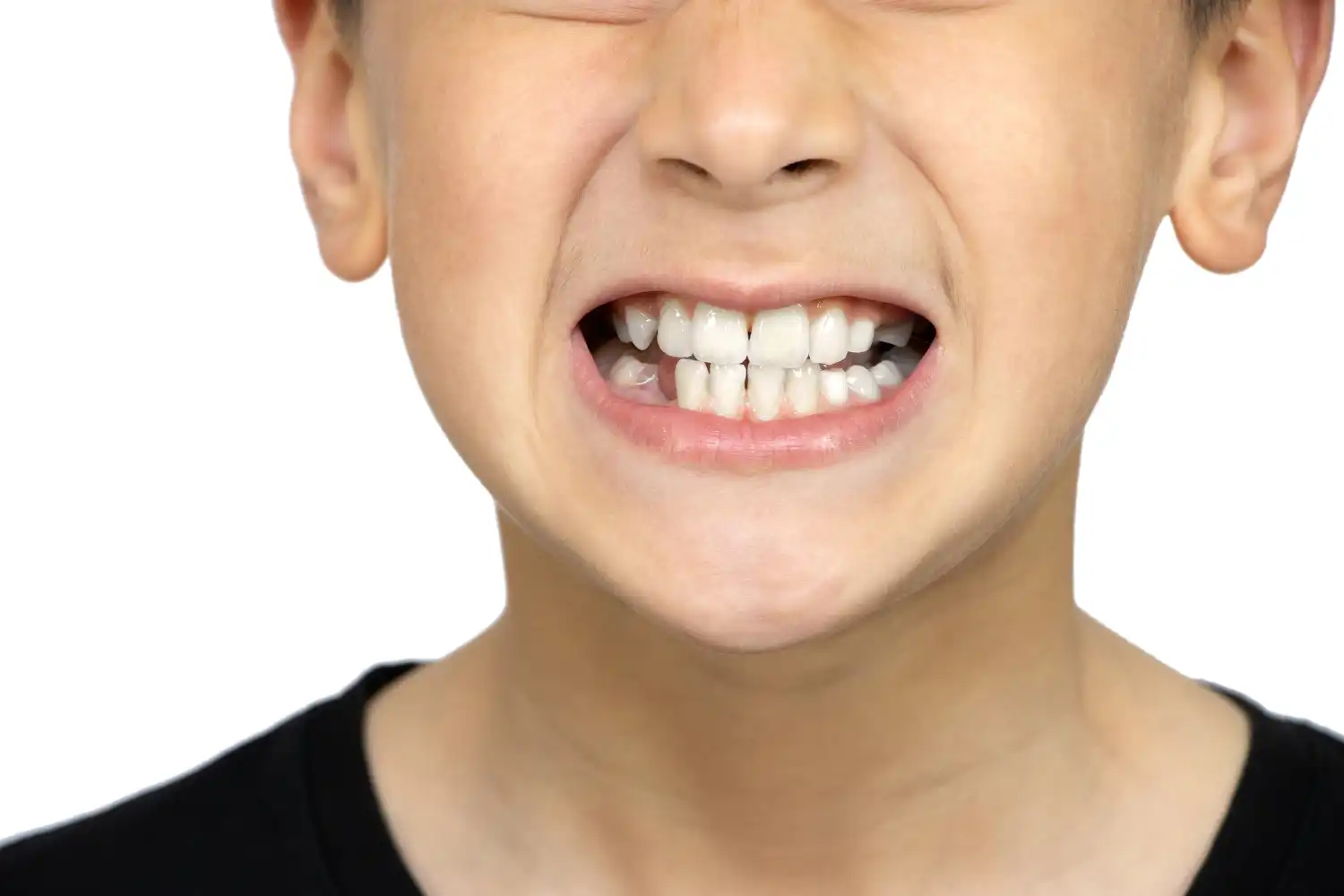
You may look at your teeth and notice that they do not seem to meet properly. Perhaps your upper teeth sit too far forward, your lower teeth appear to come in front, or there is a gap between your front teeth when you close your mouth.
The natural question is: why did this happen?
There is rarely one simple answer. Bite problems, known clinically as malocclusion, can develop because of inherited features, differences in jaw growth, tooth position and, in some cases, habits or events during childhood.
Why Do Bite Problems Develop?
The way your bite develops depends on two things working together: the growth of your jaws and the position of your teeth. Sometimes the teeth themselves are mainly responsible for the problem. In other cases, the upper and lower jaws have developed in a way that affects how the teeth meet. A person can also have a combination of both.
This is why two people with what appears to be a similar bite can have developed it for entirely different reasons. Our guide to types of bite issues explains the different bite relationships, including overbite, underbite, open bite and crossbite.
Genetics Can Influence the Way Your Teeth and Jaws Develop
Many features that affect your bite can run in families. You may inherit the size or shape of your jaws, the size of your teeth or a combination of characteristics that do not fit together proportionately. For example, differences between jaw size and tooth size can contribute to crowding or spacing, while differences in the relationship between the upper and lower jaws can affect the bite itself. This is one reason someone can develop a bite issue despite having good oral hygiene and no obvious childhood habits.
What Causes an Overbite?
An overbite can develop for different reasons depending on the individual. Sometimes the upper front teeth are positioned further forward than expected. In other cases, the lower jaw sits relatively further back, creating a more pronounced overlap between the upper and lower front teeth. Genetics can influence these tooth and jaw relationships.
The size and growth pattern of the jaws may also play a part. A pronounced overbite may therefore be primarily related to tooth position, jaw development or both. Where the problem is primarily related to tooth position, treatments such as Invisalign and clear aligners may be suitable for certain patients.
What Causes an Underbite?
An underbite is often associated with the relationship between the upper and lower jaws. For some people, the lower jaw develops more prominently in relation to the upper jaw. In others, the position of the teeth themselves contributes to the appearance of an underbite. Genetics can have an important influence on jaw growth patterns, which is why certain skeletal bite relationships may occur more frequently within families. The exact reason for an individual’s underbite needs to be assessed rather than assumed from appearance alone.
What Causes an Open Bite?
An open bite can be influenced by the position of the teeth, jaw development and certain childhood habits. Prolonged thumb or finger sucking, for example, can place repeated pressure on developing teeth. Research has found an association between persistent digit sucking and bite changes, including anterior open bites. Tongue position and swallowing patterns may also contribute in some cases. However, an open bite should not automatically be attributed to a childhood habit. Jaw growth and other developmental factors can also be involved.
Childhood Habits Can Affect Developing Teeth
Children’s mouths and jaws continue to develop as they grow. Habits that persist for a prolonged period can influence this development. These may include:
- Thumb or finger sucking
- Prolonged dummy or pacifier use
- Tongue thrusting
The effect depends on factors such as the type of habit, how often it occurs and how long it continues. This does not mean that every child with one of these habits will develop a significant bite problem. The relationship is more complex than that.
Teeth Can Shift When There is Not Enough Space
The teeth and jaws need enough space to develop together. When there is insufficient room, teeth may become crowded, rotate or erupt in positions that affect how the upper and lower arches meet. Missing teeth and differences between tooth size and jaw size can also influence alignment. Over time, these positional changes can contribute to a more complicated bite relationship.
Early Tooth Loss and Dental Development
The loss of a tooth can affect the position of neighbouring teeth, particularly while the mouth is still developing. Teeth naturally tend to move into available spaces. If this happens before permanent teeth have fully erupted, it may influence the space available for other teeth and contribute to alignment problems later on. A dentist can assess whether early tooth loss is likely to affect the developing bite and whether monitoring or treatment is appropriate.
Can an Injury Affect Your Bite?
Trauma can sometimes alter the position of a tooth or affect the way teeth meet. This may happen following an accident involving the mouth or jaw. The impact can range from a minor change affecting an individual tooth to a more significant injury involving the jaw. If your bite suddenly feels different after an injury, it is worth having it assessed rather than waiting to see whether it settles on its own.
What Symptoms Can a Bite Problem Cause?
Some people have a noticeable bite difference without experiencing any obvious symptoms. Others may find that their bite affects everyday functions. Malocclusion symptoms can include difficulty chewing or discomfort when teeth do not meet comfortably. Certain bite relationships may also make particular teeth more vulnerable to uneven wear or damage. The presence of symptoms does not necessarily tell you which type of bite problem you have. A professional assessment looks at the relationship between the teeth and jaws as a whole.
Understanding the Cause Helps With the Next Step
A bite problem may be inherited, related to jaw development, influenced by tooth position or shaped by several factors working together. Understanding the underlying reason can help explain why a particular bite has developed. It also helps guide the assessment of whether correction is appropriate.
