


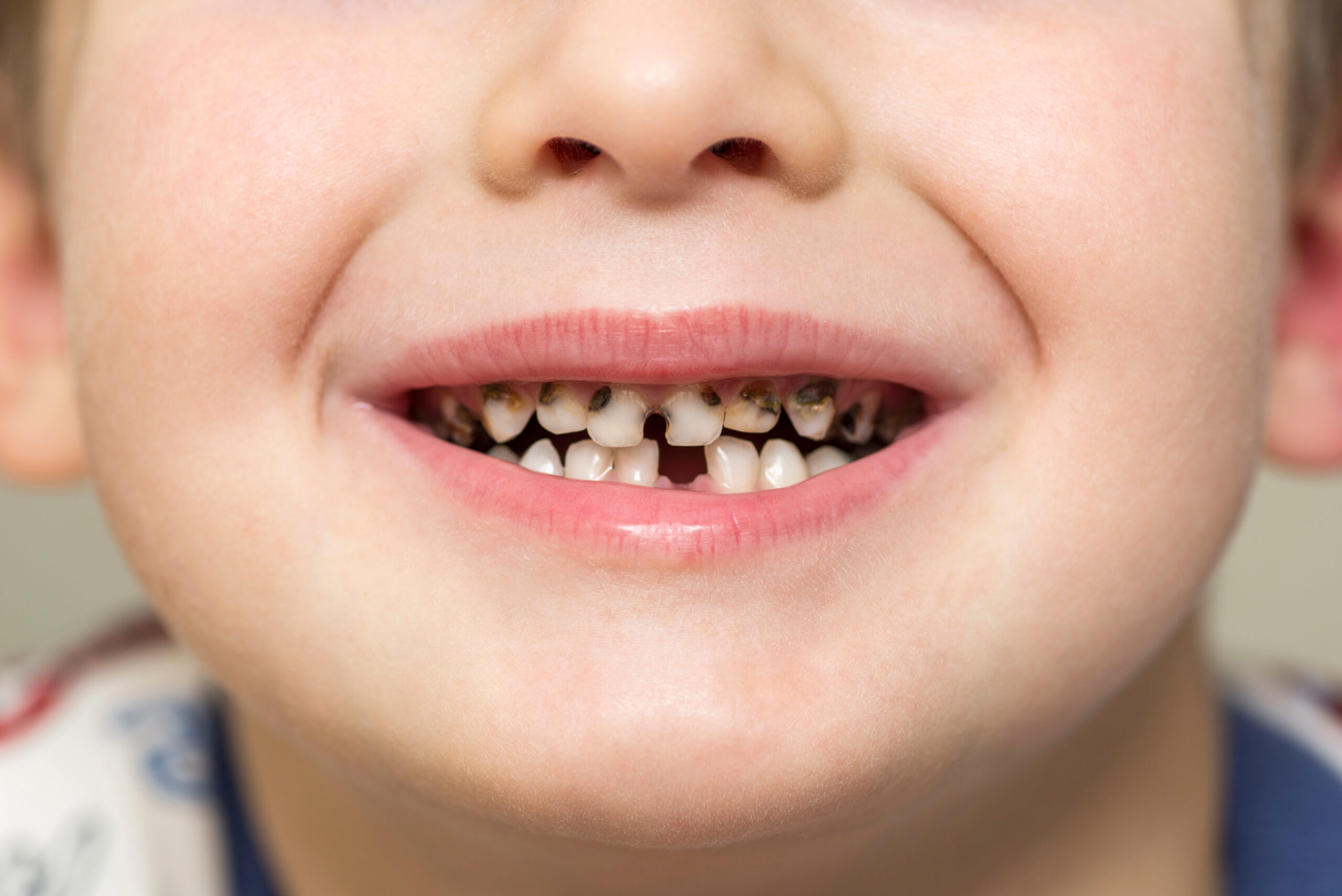
You notice a dark mark that wasn’t there before. At first, you assume it is something stuck to your tooth. Then brushing does nothing. The reason can be surprisingly different depending on where the black colour is coming from. Sometimes, the discolouration sits on the outside of the tooth. Coffee, tobacco, certain mouthwashes and other external factors can leave dark staining on the enamel. In other cases, the colour change begins inside the tooth itself. And occasionally, a black area may indicate tooth decay rather than staining at all.
Black Teeth Causes Can Be Divided Into Two Types
The simplest way to understand what causes black teeth in adults is to separate problems affecting the outside of the tooth from those happening within it.
- External discolouration develops when coloured substances or deposits collect on the tooth surface.
- Internal discolouration happens when changes occur within the tooth structure itself.
The two can look similar in a mirror, but they have very different causes.
Dark Food, Drinks and Tobacco Can Stain Teeth
Some foods and drinks contain pigments that can gradually build up on the outer surface of teeth. Tea, coffee and other strongly coloured products are common contributors to tooth staining. Tobacco can also cause significant brown or dark discolouration over time. This type of black staining of teeth usually develops gradually rather than changing a tooth overnight. The colour may be more noticeable in areas where plaque tends to accumulate or where the tooth surface has natural grooves and irregularities.
Plaque Can Create the Conditions for Dark Staining
Plaque itself is not necessarily black. However, plaque and the film that naturally forms over teeth can provide a surface to which pigments attach. There is also a specific form of black tooth plaque, often appearing as a line or series of dark dots near the gum line.
Research suggests this type of black stain is associated with chromogenic bacteria and deposits involving iron compounds. Some stains become firmly attached to the tooth and require professional cleaning. Where plaque, calculus or external staining is contributing to the darker appearance, Hygienist treatment can help remove surface deposits and improve oral cleanliness.
Certain Products and Medications Can Cause Dark Staining
Some substances used in the mouth can affect tooth colour. For example, chlorhexidine-containing mouth rinses can cause brown or black staining in some people. Iron-containing supplements may also contribute to external tooth discolouration. This does not mean you should stop a prescribed medicine because of a change in tooth colour. Instead, discuss the issue with your dentist or prescribing healthcare professional.
What Causes a Tooth to Go Black From the Inside?
A tooth can darken when something affects its internal tissues. One possible cause is trauma. A blow to the mouth or even one that happened years earlier can damage the pulp inside a tooth. Changes within the tooth may then cause it to become darker over time.
This can be particularly noticeable when one tooth becomes significantly darker than the teeth around it. A previous injury may be easy to remember, such as a sports accident or fall. In other cases, the original trauma was minor and may have been forgotten.
If trauma or infection has significantly damaged the pulp inside the tooth, Root canal treatment may be required to treat the affected tissue and preserve the tooth where appropriate.
Tooth Decay Can Cause Black Areas
One of the more important causes of a black area on a tooth is dental decay. As decay progresses, the tooth can develop brown or black spots and, eventually, cavities. A dark area is not always decay, but it should not automatically be dismissed as staining either.
This is why appearance alone can be misleading. A dark surface stain may sit on an otherwise healthy tooth. Decay, on the other hand, involves damage to the tooth structure itself.
Our guide to how to get rid of black stains on teeth explains why the difference matters before attempting to remove a dark mark.
Cracks and Damaged Tooth Surfaces Can Become Darker
A crack or damaged area can change the appearance of a tooth in several ways. Pigments from food and drinks may enter microscopic defects in the tooth surface. In some cases, decay can develop around a damaged area. This is one reason a dark line or spot associated with a crack deserves attention rather than repeated attempts at polishing it away.
Old Dental Work Can Change the Appearance of a Tooth
Dental restorations can affect the colour of a tooth or the surrounding structure. Older dental materials, changes around a restoration or leakage beneath existing dental work can sometimes contribute to a darker appearance. A dark area around a filling or crown does not automatically mean the restoration has failed. However, it should be examined to establish whether the colour is superficial or associated with a problem underneath.
What Causes Black Gums?
Wondering what is the reason for black gums? Dark gums and black teeth are related visually, but they are not necessarily caused by the same thing. Natural pigmentation can make gums appear brown or dark. Tobacco use can also contribute to increased pigmentation. Localised dark spots may have other explanations, including pigmentation changes or material associated with previous dental treatment. For a detailed explanation, read what does it mean when gums are black?.
The Same Colour Can Have Very Different Causes
This is the difficult part about black teeth. A dark line near the gum can be a form of external staining. A black spot may indicate decay. One tooth turning dark may be related to changes inside it following trauma. They can all look similar at first glance. That is why the cause of black teeth cannot always be identified by colour alone. A dental examination can establish whether the problem is sitting on the surface, affecting the tooth structure or developing from inside the tooth.
